
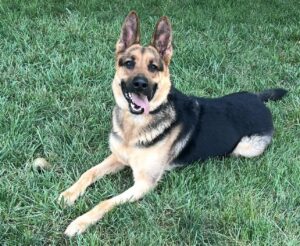
The doorbell rings. Your dog launches off the couch, and you’re left juggling groceries, a leash, and a very excited greeting party.
If that sounds familiar, you’re not alone. Learning how to teach a dog place can give your dog a clear job to do when life gets busy. It takes patience and practice, but the steps are simple.
What Is the Place Command?
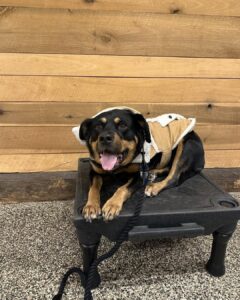
The place command teaches your dog to go to a designated spot, such as a bed, mat, or raised platform, and remain there until released.
Think of it as a “go relax right here” cue. Your dog knows where to be and what’s expected, which takes the guesswork out of busy moments.
Why the Place Command Is Worth Teaching
Place is also part of the skills taught in our Pittsburgh dog obedience training programs.
- Door manners: Your dog goes to their spot instead of rushing guests.
- Kitchen time: You can cook or eat without your dog underfoot.
- Calmer routines: Your dog learns that settling down earns rewards.
- Easier outings: A portable mat can give your dog a familiar spot at a patio, a friend’s house, or a vet visit.
Results vary from dog to dog, but the skill builds focus and impulse control over time.

Before You Start
You can review our training packages and pricing to see how Place and Extended Place fit into our published obedience curriculum.
- Pick a spot. A mat, bed, or cot works well. Choose something your dog can easily recognize.
- Choose your words. Pick a cue like “place” and a release word like “free.” Use them the same way every time.
- Gather treats. Small, soft treats your dog loves work best.
- Check the basics. It helps if your dog already knows “down.”
Start in a quiet room with few distractions.
How to Teach a Dog Place: Step by Step
Keep sessions short and upbeat. If your dog gets stuck, go back to the last step that worked.
Step 1: Introduce the Spot
Lure your dog toward the mat with a treat. Reward any interest, like sniffing or stepping near it.
Step 2: Get All Four Paws On
Reward only when all four paws are on the mat. This helps your dog understand exactly where “place” is.
Step 3: Reward the Position
Once your dog understands where to go, encourage a sit or down and reward them for remaining on the spot. Build duration gradually.
Step 4: Add the Cue
Once your dog goes to the mat easily, say “place” just before they step on. Reward when they arrive. Over time, the word starts to mean “go there.”
Step 5: Add the Release Word
After a few seconds, say your release word in a cheerful tone. Then invite your dog off the mat. This teaches them that the job has an end.
Step 6: Build Time
Gradually ask for longer stays. Mix up the timing so your dog doesn’t expect the same pattern every time.
Step 7: Add Distance
Start by standing next to the mat, then step back a little at a time. Eventually, you can send your dog to their spot from across the room.
How to Introduce Distractions
Distractions come last. Wait until your dog can hold a calm place in a quiet room.
Then add one challenge at a time:
- Start mild. Walk past the mat, drop a toy nearby, or make a small noise.
- Raise the difficulty slowly. Try a family member walking by, then a knock at the door, then the doorbell.
- Make it easier when needed. Shorten the time or distance and use a better treat.
- Practice real-life moments. Practice during mealtimes, when visitors arrive, and at other busy times of the day.
Keep in mind that every dog is different. If your dog keeps leaving the mat, the distraction may be too big for now.
Common Mistakes to Avoid
- Moving too fast. Skipping steps can lead to a dog who understands the cue only in easy settings.
- Using the mat as punishment. The spot should feel like a good place to be.
- Forgetting the release. Without a release word, your dog may start to guess when it’s over.
- Repeating the cue. Say “place” once, then help your dog succeed.
- Long sessions. Short, frequent practice is usually more effective.
- Rewarding too rarely. Early on, frequent rewards help your dog stay focused.
- Inconsistent rules. Everyone in the home should use the same words and expectations.
Practical Tips for Everyday Life
- Practice before the busy moments, not during them.
- Use the same mat at home and on trips so it becomes a familiar signal.
- Pair “place” with a chew or toy to make settling more appealing.
- Keep practicing even after your dog gets it. Reliable behavior comes from repetition.
For another look at the basics, check out this AKC’s guide to teaching your dog to go to place. And this overview of teaching your dog place
Get Help With Obedience, Confidence, and Calm Behavior at Home
Teaching “place” is one piece of building a calmer, more confident dog. If you’d like hands-on guidance, a professional trainer can look at your dog’s age, temperament, and habits, then help you create a plan.
If you need help building reliable obedience skills, explore our dog obedience training in Pittsburgh or contact our team for a free phone consultation. Progress varies by dog, and regular practice at home is a big part of the process.
FAQs
How long does it take to teach a dog place?
It depends on your dog’s age, personality, and experience. Many dogs understand the basic idea fairly quickly, but making it reliable around distractions usually takes more practice. Short, regular sessions tend to help.
Do I need a special mat or bed?
No, but it helps to choose something distinct. A mat, raised cot, or specific bed gives your dog a clear visual cue. A portable mat is handy for travel.
What if my dog keeps leaving the spot?
Go back to an easier step, like a shorter stay or less distance. Use treats your dog really likes and reward more often. If the issue continues, a trainer can help you figure out what’s getting in the way.
Can puppies learn the place command?
Yes, puppies can start learning it with short, simple sessions. Keep expectations realistic, since young dogs have short attention spans. Celebrate small wins and build slowly.