
Introduction
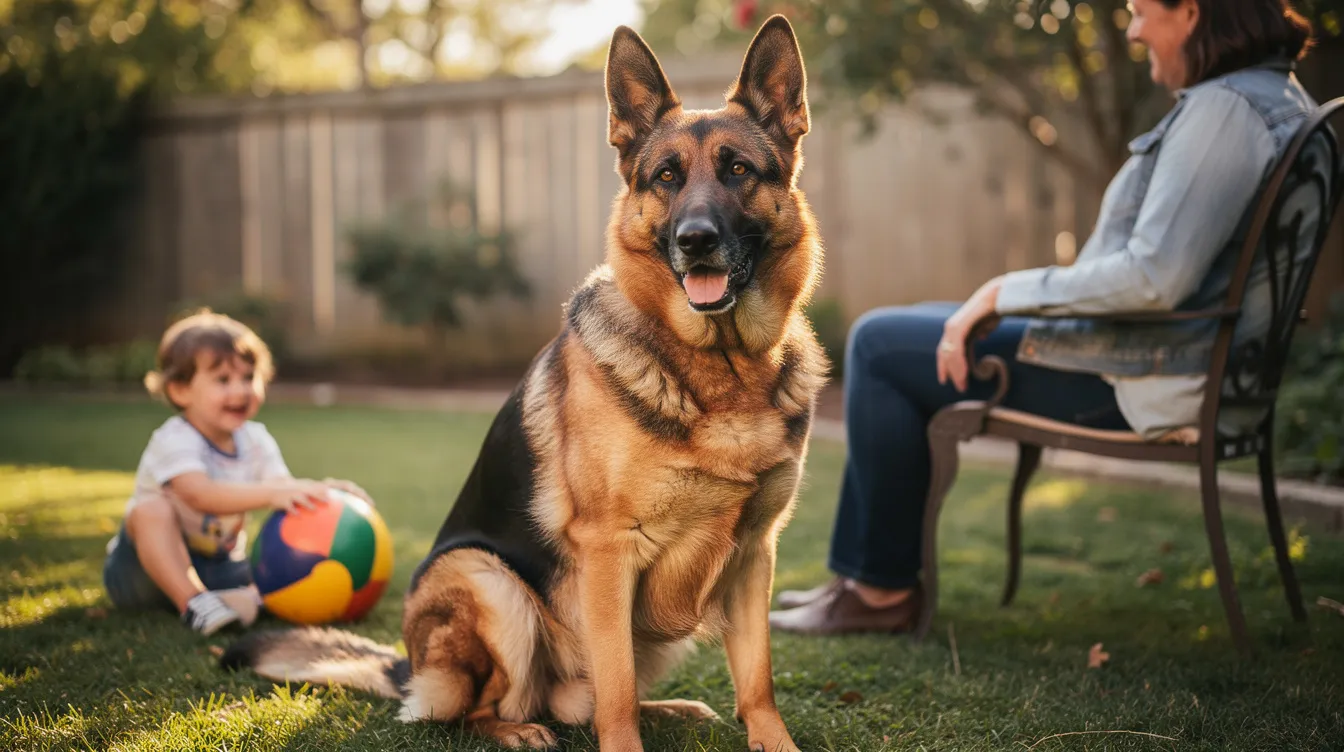
German Shepherd temperament combines confidence, loyalty, and protective instincts in a package that demands structured training and consistent leadership. The German Shepherd dog, originally developed by Captain Max von Stephanitz in the 1890s as a herding dog, has become one of the most popular breeds worldwide because these traits translate well into roles ranging from service dog work to family companionship.
This article covers the natural temperament traits of the German Shepherd breed, how those traits develop across life stages, and what training approaches produce well-rounded dogs in urban environments like Pittsburgh. The target audience is current German Shepherd owners and prospective owners who want to understand what drives their dog’s behavior and how to shape it. Content focuses on evidence-based behavioral science and practical training solutions; breed health topics like hip dysplasia and degenerative myelopathy appear only where they directly affect temperament.
German Shepherds are naturally confident, loyal, and protective dogs with aloof tendencies toward strangers, requiring structured training and early socialization for stable temperament development. German Shepherds can take up to 4 years to mature fully, making long-term commitment to training essential.
By reading this article, you will:
- Understand the core shepherd temperament traits (confidence, loyalty, protective instincts) and the genetic research behind them
- Recognize how temperament shifts across the puppy years, adolescence, and adulthood
- Identify training needs tied to your own dog’s drive level and breeding line
- Learn specific solutions for common behavioral issues like separation anxiety, reactivity, and excessive protectiveness
- Know how to select the right breeder, training program, and lifestyle adjustments to create a well-behaved companion
Understanding German Shepherd Temperament Fundamentals
Temperament refers to the inherited behavioral tendencies and emotional responses that shape how a German Shepherd reacts to stimuli. These include predispositions toward fear, curiosity, calmness, and defensive behavior. In Swiss behavior tests covering approximately 4,855 GSDs, researchers measured traits like nerve stability, self-confidence, and defense drive, finding heritabilities between 0.05 and 0.21. That means genetics accounts for 5% to 21% of the variation in these traits; the rest comes from environment, socialization, and training.
Understanding your dog’s temperament determines how quickly a GSD learns obedience, how the dog interacts with children and strangers, and whether off-leash reliability is achievable. German Shepherds are renowned for their courage, loyalty, and high intelligence. They are one of the most intelligent dog breeds, learning commands exceptionally fast. That high intelligence cuts both ways: a GSD learns good habits quickly but also picks up bad ones if the owner provides inconsistent guidance.
Confident and Alert Nature
German Shepherds are naturally alert and watchful, making them excellent watchdogs. In Swiss and German breeding programs, self-confidence and nerve stability rank as central selection criteria for working lines. A Swedish Dog Mentality Assessment of 5,959 GSDs found that traits like curiosity and fearlessness had heritabilities around 0.09 to 0.23, confirming a genetic foundation for the breed’s characteristic boldness.
This confidence affects trainability directly. A confident dog recovers faster from novel stimuli (loud noises, unfamiliar environments) and engages more readily in training exercises. German Shepherds are generally energetic, outgoing, and stable. Dogs lacking confidence, often from backyard breeders or puppy mills that skip temperament screening, tend to show fear-based reactions that make training slower and less predictable.
Loyalty and Bonding Characteristics
German Shepherds form deep bonds with their families and are known as “velcro dogs.” A genetic dissection study across UK and Swedish cohorts found human-directed playfulness had a heritability of approximately 0.23, the highest among the behavioral traits measured. This means the breed’s devotion to its loved ones has a measurable genetic basis.
A well-trained German Shepherd can be affectionate and gentle with family members. German Shepherds are loyal and protective of their families, which makes them excellent family dogs when properly socialized. Many German Shepherd owners describe their dogs as responsive to household moods, often positioning themselves near family members during stressful moments. This loyalty, however, feeds directly into the breed’s protective nature.
Protective Instincts and Aloofness
German Shepherds are naturally wary of strangers, making them ideal guard dogs. The American Kennel Club breed standard describes the German Shepherd as having “a certain aloofness that does not lend itself to immediate and indiscriminate friendships.” This is not a flaw; it is a deliberate trait. German Shepherds stand apart from other breeds that greet every stranger with enthusiasm.
The distinction between healthy caution and problematic fearfulness matters. Data from a guide-dog organization study showed that GSDs raised without adequate exposure to varied people developed increased stranger-directed aggression between 6 and 12 months. Their protective instincts require clear boundaries to distinguish threats from normal visitors. Without those boundaries, the steadfast guardians of a family can become reactive toward delivery workers, house guests, and passersby.
German Shepherds can exhibit a wide range of temperaments based on breeding. How that temperament unfolds depends on what happens during each developmental stage.
Temperament Development Through Life Stages
German Shepherd temperament is not static. The dog you bring home at 8 weeks will behave differently at 18 months and differently again at 4 years. Understanding these stages helps owners set realistic expectations and intervene at the right moments.
Puppy Temperament (8 Weeks to 18 Months)
German Shepherd puppies are high-energy creatures driven by curiosity and oral exploration. Many GSD owners affectionately call their pups “land sharks” because of intense mouthing behavior during this phase. Destructive chewing often occurs due to boredom in German Shepherds, making environmental enrichment and proper puppy training essential from day one.
The period from 3 to 16 weeks is the critical socialization window. Early socialization during this phase shapes whether a puppy develops into a confident adult or a fearful one. Research on GSD behavioral testing at 5, 7, and 9 months demonstrated that reactivity measured during puppyhood correlates with adult behavior patterns. This means the work owners do at a young age, exposing their pup to different environments, people of various ages, other dogs, and urban stimuli, directly determines adult temperament stability.
Start training the moment you bring your puppy home. German Shepherds require extensive socialization to develop a stable temperament, and waiting until behavioral issues emerge corrects harder. A structured socialization plan during these early months yields measurable benefits in reduced fear and stranger-directed reactivity later.
Adolescent Phase (18 Months to 3 Years)
Adolescence brings boundary-testing. Your previously cooperative shepherd may ignore commands, pull harder on walks, and react to stimuli that previously caused no response. Protective instincts emerge and intensify during this period. The guide-dog study mentioned earlier found that inadequate socialization produced the steepest increase in stranger-directed aggression between 6 and 12 months, with effects compounding into adolescence.
Physical maturity continues through this phase. Joint development, bone growth, and muscle strengthening are still underway. Over-exercising before 18 months can cause structural problems, and pain from those issues can trigger irritability and reactivity. This creates a feedback loop: physical discomfort worsens behavioral responses, which leads to more restrictive management, which reduces the dog’s outlets for energy.
German Shepherds have very high energy levels, and adolescent dogs need both physical and mental exercise to remain stable. Without proper training, German Shepherds develop destructive behaviors during this phase more than any other. Pulling on a leash is a common issue, and it tends to worsen during adolescence as the dog gains strength and confidence.
Mature Adult Temperament (3+ Years)
By age 3 to 4, German Shepherd temperament stabilizes. Swiss breeding data spanning cohorts born from 1977 to 2009 showed that genetic trends in traits like self-confidence and defense drive improved over time, though slowly, because heritabilities are modest. A mature German Shepherd should display what trainers call an “off-switch”: the ability to be high-drive during work or play and calm at rest.
Full protective judgment develops during this stage. Rather than reacting reflexively to every unfamiliar person or sound, a well-socialized adult GSD evaluates situations before responding. Most German Shepherds reach their peak trainability during this period. This is when advanced obedience training and specialized roles (therapy dog work, search and rescue) become realistic goals, provided the foundation was laid during earlier stages.
Advanced Temperament Factors and Training Implications
Individual German Shepherd temperament varies based on breeding line, environmental history, and training method. Understanding these factors helps owners predict their dog’s needs and select the right approach.
Breeding Line Impact on Temperament
Working lines are bred for functional behavior: high defense drive, high prey drive, problem-solving ability, and stress tolerance. Show lines prioritize conformation to breed standard, focusing on structure, angulation, and movement. A 2025 comparative analysis documented the divergence: working-line GSDs undergo stronger selection for nerve stability, problem-solving, and character soundness, while show lines emphasize morphology and color.
The practical result: working-line dogs from reputable breeders typically require more mental stimulation, more structured leadership, and more daily exercise to remain balanced. Show-line German Shepherds tend to have more forgiving temperaments and adapt more readily to companion life, though variation within each line is large. Most reputable breeders perform health testing and temperament screening regardless of line.
Backyard breeders and puppy mills skip these screenings. The result is unpredictable temperament, with puppies more likely to exhibit fear-based aggression, low nerve stability, or health problems that compound behavioral issues. German Shepherds from these sources often develop the very traits (reactivity, separation anxiety, destructive behavior) that lead owners to seek rescue placement.
A trend worth noting: breeders are increasingly crossing working lines with show lines to produce dogs with both high drive and a better off-switch. Show line breeders are also selecting more actively for nerve stability and working temperament, not appearance alone.
Socialization and Environmental Factors
German Shepherds require extensive socialization to prevent aggression. Early socialization means exposure to varied people, animals, sounds, and environments before the 16-week window closes. But socialization does not end at 16 weeks. Continued positive experiences with other pets, other dogs, and unfamiliar humans throughout adolescence reinforce the foundation.
Environmental enrichment matters as much as physical exercise. German Shepherds require vigorous physical exercise and mental stimulation to remain balanced. They require brisk walking every day and all-out running in a safe area. Mental exercise is crucial for German Shepherds; they thrive on having a job to do. Interactive toys and puzzle feeders supplement physical activity and reduce the boredom that triggers destructive chewing and vocalization.
German Shepherds require extensive mental stimulation daily. A dog that gets a 30-minute walk but no cognitive challenge will still exhibit restless, anxious, or destructive behavior. For Pittsburgh owners, this means incorporating training sessions, scent games, or structured tasks into the daily routine.
Training Approach Comparison
| Factor | Positive Reinforcement Only | Structured Obedience (Balanced) | No Formal Training |
|---|---|---|---|
| Reactivity reduction | Moderate; works well for mild cases | High; combines motivation with clear boundaries | None; reactivity typically worsens |
| Off-leash reliability | Variable; depends on drive level | High; tested under distraction | Not achievable |
| Suitability for high-drive dogs | Can struggle with strong-willed GSDs | Designed for high-energy breeds | Produces behavioral issues |
| Separation anxiety management | Helpful with counterconditioning protocols | Effective when combined with independence training | Separation anxiety worsens without intervention |
| Timeline to results | 8-16 weeks for basic manners | 2-4 weeks in intensive programs | N/A |
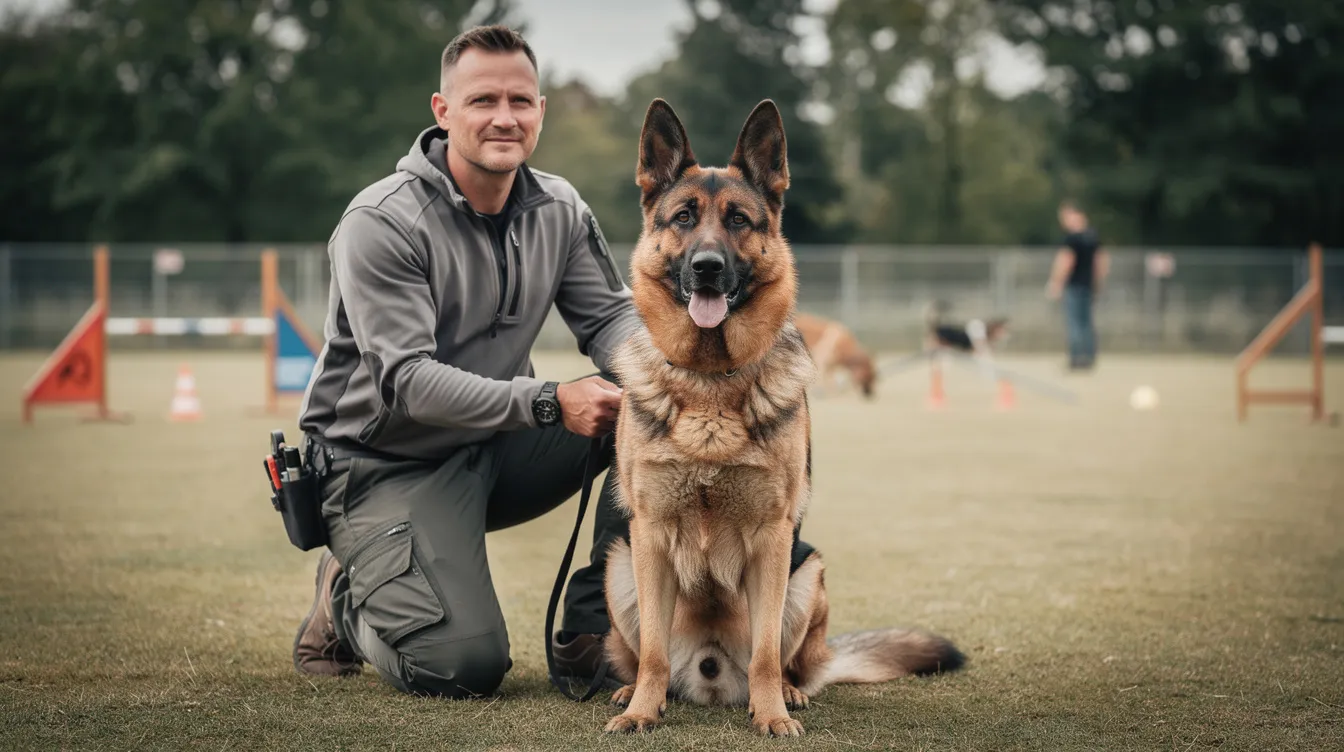
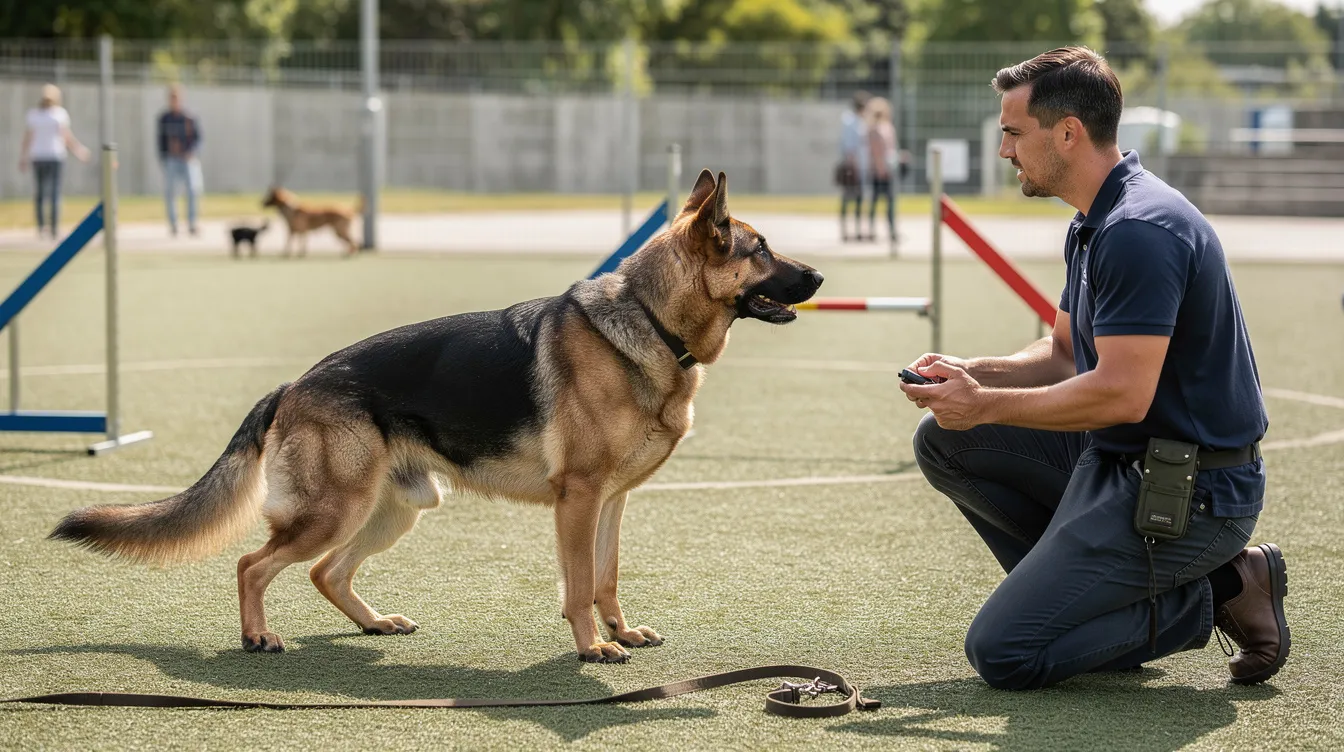
Training helps manage German Shepherds’ high energy levels. Professional training is recommended for German Shepherds, particularly those from working lines or dogs showing early signs of reactivity. The highly intelligent breed responds best to handlers who stay consistent and provide clear expectations.
Common Temperament Challenges and Training Solutions
Most dogs go through at least one difficult behavioral phase. For German Shepherd owners in Pittsburgh, where urban distractions (traffic, pedestrians, other dogs in parks) test a dog’s training daily, these challenges require specific solutions.
Excessive Protectiveness and Territorial Behavior
German Shepherds can develop aggression toward strangers when protective instincts go unchecked. The protective nature that makes them ideal as a guard dog becomes a liability when the dog decides independently which visitors are threats.
The solution involves structured obedience with boundary setting. The dog learns that the owner makes decisions about who enters the house and who approaches on walks. Controlled exposure to visitors, paired with reward for calm behavior, teaches the dog that unfamiliar people are neutral rather than threatening. Aggression-specific training programs address this by reinforcing commands under distraction and building the dog’s trust in the owner’s judgment.
Separation Anxiety and Destructive Behaviors
Separation anxiety can lead to vocalization and destruction in German Shepherds. The same loyalty that makes them gentle family pets creates distress when they are separated from their family. Many German Shepherds will destroy door frames, crates, and furniture when left alone, and neighbors will hear sustained barking or howling.
Effective intervention combines desensitization (gradually increasing alone time from seconds to hours), environmental management (interactive toys, scent-based enrichment), and independence training (teaching the dog to hold a “place” command at increasing distances from the owner). For severe cases, a board and train program provides the controlled environment and consistency needed to break the cycle.
Reactivity Toward Other Dogs and Strangers
Adolescent German Shepherds frequently develop reactivity on leash, lunging and barking at other dogs or unfamiliar people. This is distinct from aggression; most reactive dogs are experiencing fear or frustration rather than predatory intent.
Behavior modification for reactive dogs follows a distance-based protocol. The handler identifies the threshold distance at which the dog notices but does not react to the trigger, then works at that distance with rewards for calm behavior. Over sessions, the distance decreases. Pairing the reactive dog with a calm, stable dog during controlled walks can accelerate progress. The key is avoiding flooding (forced close proximity to triggers), which worsens reactivity in most cases.
Adolescent Rebellion and Testing Behaviors
Between 18 and 30 months, many German Shepherd owners experience a dog that seems to have forgotten all prior training. The dog ignores recalls, tests house rules, and exhibits strong-willed independence. This is normal developmental behavior, not a character flaw.
Consistency is the primary tool. Every family member enforces the same rules, uses the same commands, and provides the same consequences. Mixed signals from different household members create confusion and escalate testing behavior. Exercises requiring impulse control (stay under distraction, leave-it with high-value items, structured walks with direction changes) channel the adolescent GSD’s energy into productive focus. This phase is temporary, and dogs that receive consistent leadership through it emerge as more reliable adults.
Conclusion and Next Steps
German Shepherd temperament is a blend of genetic predisposition and environmental shaping. The breed’s confidence, loyalty, and protective instincts make it canine royalty among popular breeds, but those same traits create challenges without structured training and socialization. The ideal dog for a given family depends on matching the dog’s line and drive level to the owner’s lifestyle, experience, and commitment to ongoing training.
To move forward with your own dog:
- Assess your German Shepherd’s current temperament: note specific triggers, energy levels, and situations where behavior breaks down
- Identify whether challenges stem from insufficient socialization, inconsistent rules, unmet exercise needs, or a mismatch between the dog’s drive level and your daily routine
- Establish a consistent daily schedule that includes physical exercise, mental stimulation, and structured training sessions
- Consult a professional trainer if your dog shows reactivity, separation anxiety, or escalating protectiveness
For Pittsburgh-area GSD owners looking at therapy dog preparation, the screening process requires dogs with low stranger-directed fear and high nerve stability. Selecting puppies from reputable breeders who test for these traits, then building a positive relationship through consistent socialization, gives the best foundation.
Additional Resources
Off-Leash K9 Training Pittsburgh offers a free phone consultation for German Shepherd owners evaluating training options. Their programs address breed-specific needs including off-leash reliability, reactivity modification, and advanced obedience.
Review their plans and pricing for program details, or explore their guide to common puppy training issues for immediate guidance on early-stage behavioral challenges.
Local Pittsburgh resources for socialization include structured puppy classes (look for programs that use controlled introductions rather than free-for-all play), urban exposure walks in neighborhoods like the Strip District or South Side, and group training sessions where your shepherd can practice obedience around distractions from other dogs and pedestrians.