
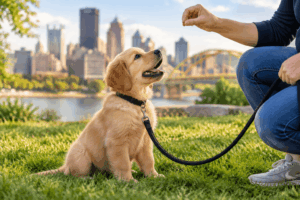
Bringing home a new puppy is exciting, but it also raises a common question: when should you actually start training? The short answer is sooner than most people think. Understanding when to start puppy training, and what to focus on first, sets the tone for how your dog behaves for years to come.
This guide covers the right age to begin, the foundations every puppy needs early on, and the most common mistakes new owners make along the way.
When Can Puppies Start Training?
Learning Begins From Day One
Puppies start absorbing information the moment they arrive in a new home, long before they’re ready for formal obedience work. Every interaction, from how you greet them to how you respond to nipping, teaches them something. This is why waiting until a puppy is “old enough” often means missing valuable early lessons.
The Ideal Age for Formal Training
Most puppies are ready for basic training around 7 to 8 weeks old. At this age, they can begin learning simple cues like sit, come, and their name, along with early leash and handling exercises done indoors or in a safe, controlled space. More structured obedience work and outdoor socialization typically ramp up between 12 and 16 weeks, once a puppy has more of their vaccinations. Talk to your veterinarian about the right timeline for your specific puppy.
The takeaway is simple: you don’t need to wait for a certain age to start shaping good habits. Early, gentle guidance matters just as much as formal training sessions later on.
Important Early Puppy Training Foundations
Choose Positive Reinforcement
Rewarding behavior you want to see, with treats, praise, or play, is the most effective and puppy-friendly way to train. Positive reinforcement builds trust and makes your puppy more willing to engage, rather than teaching them to avoid you out of fear.
Keep Training Sessions Short
Puppies have short attention spans. A few minutes of focused training, several times a day, works far better than one long session. Ending on a successful note keeps your puppy motivated and eager for the next round.
Build a Consistent Routine
Puppies thrive on predictability. Set regular times for meals, potty breaks, naps, and play. A consistent daily rhythm helps your puppy understand what to expect, which makes training easier to layer on top of their existing routine.
Get Your Puppy Comfortable With Handling
Gently handling your puppy’s paws, ears, and mouth early on helps them get used to being touched, which makes future grooming, vet visits, and everyday care much easier. Pair handling with praise or a small treat so it becomes a positive experience rather than something to tolerate.
Socialization, House Manners, and Basic Obedience
Socializing Your Puppy Safely
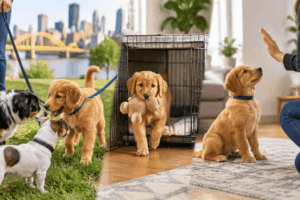
Socialization is one of the most important parts of early puppy development. Introduce your puppy to new people, sounds, surfaces, and calm, healthy dogs in a controlled way. Keep experiences positive and low-pressure, and avoid forcing interactions if your puppy seems overwhelmed. Since full vaccination isn’t complete yet at this age, check with your vet about safe ways to socialize before your puppy has full access to public spaces.
Teaching House Manners
House manners, like not jumping on guests, waiting calmly at doors, and not counter surfing, are easiest to teach early. Puppies learn quickly, so a habit allowed at 10 weeks old can be much harder to undo at 10 months. Redirect unwanted behavior to something appropriate, and reward the response you want instead.
Starting Basic Obedience Cues
Simple cues like sit, stay, come, and leave it give your puppy a foundation for communication with you. Start in a quiet, distraction-free space, then gradually practice in busier environments as your puppy improves. Building these basics early makes more advanced obedience training much smoother later on.
Common Puppy Training Mistakes to Avoid
A few missteps tend to show up again and again with new puppy owners.
Waiting Too Long to Start
Delaying training until a puppy is “older” often means missing the window where habits are easiest to shape.
Being Inconsistent
If jumping on the couch is allowed sometimes but not others, your puppy has no clear rule to follow. Everyone in the household should apply the same expectations.
Allowing Behaviors That Won’t Be Cute Later
Letting a puppy do something you won’t want in an adult dog, like pulling on the leash or jumping up to greet people, only makes it harder to correct down the road.
Using Harsh Corrections
Punishment-based methods can damage trust and increase fear or anxiety. Positive reinforcement is more effective and better for your puppy’s long-term behavior.
Skipping Socialization
Puppies who aren’t exposed to new people, places, and experiences early on are more likely to develop fear or reactivity as adults.

How Consistent Training Shapes a Well-Behaved Adult Dog
The habits your puppy forms now become the foundation of their adult behavior. Dogs raised with clear expectations, regular practice, and calm, consistent guidance tend to grow into more confident, well-mannered adults.
Training isn’t something to finish and move past. It’s an ongoing part of your dog’s development, and the effort put in during puppyhood pays off for years.
If you’re not sure where to start, or you want support building obedience, confidence, and calm behavior at home, reaching out to a professional trainer can help you put together a plan suited to your puppy.
Frequently Asked Questions
When Should You Start Puppy Training?
You can start basic training as early as 7 to 8 weeks old, with more structured obedience work following around 12 to 16 weeks. Informal learning, like handling and routine, can begin the moment your puppy comes home. Check with your vet on timing for outdoor socialization based on your puppy’s vaccination schedule.
What Is the First Thing I Should Teach My Puppy?
Many trainers recommend starting with attention and name recognition, teaching your puppy to look at you when called. This builds a foundation for every other cue that follows, since a puppy who is focused on you is easier to guide through the rest of training.
How Long Should Puppy Training Sessions Be?
Short sessions work best, usually just a few minutes at a time, several times throughout the day. Puppies lose focus quickly, so brief, positive sessions are more effective than long ones.
Can I Train My Puppy Before They Finish Their Vaccinations?
Yes, plenty of training can happen indoors or in a safe, private space before vaccinations are complete. This includes basic cues, handling exercises, and controlled introductions to new people. Save public spaces and dog parks for after your vet confirms your puppy is fully protected.
What If My Puppy Isn’t Responding to Training?
It’s common for puppies to need extra time or a different approach. Try shorter sessions, higher-value treats, or a quieter environment with fewer distractions. If progress still feels stuck, a professional trainer can help identify what’s getting in the way.